Of the Forest #1-25
Richard Kraft
Of the Forest is published in a numbered edition of 250. Nos. 1-25 also include a unique print
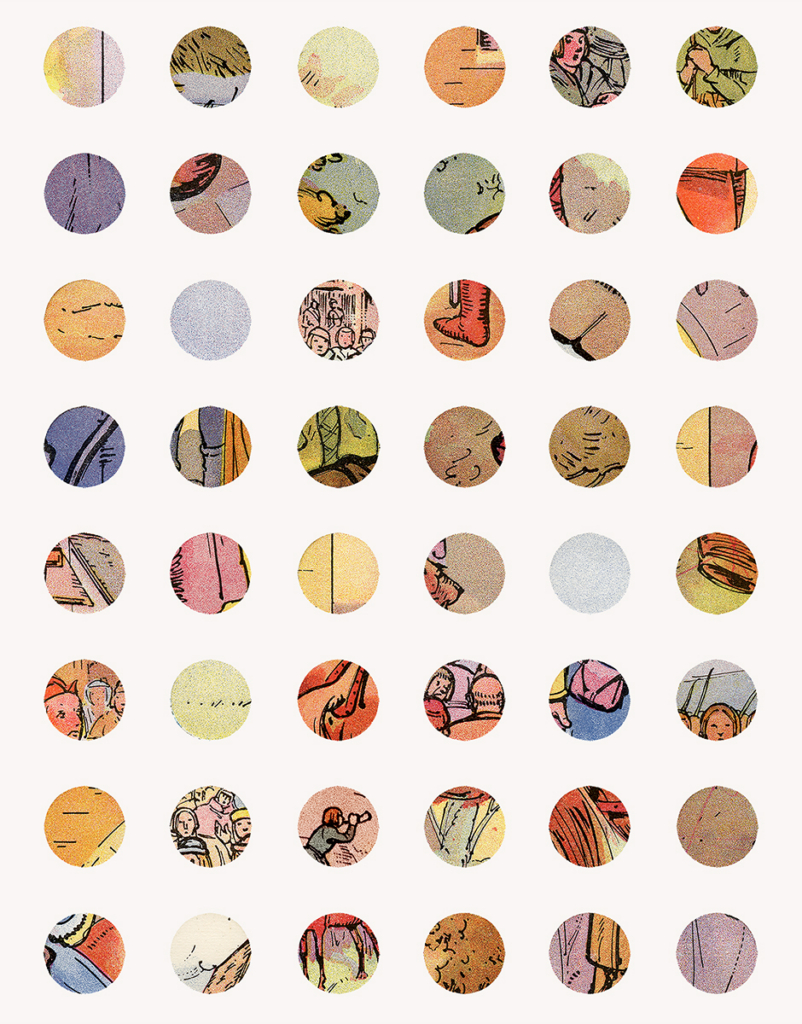
One of the twenty-five unique prints.

Unique, archival ink jet print, 5.875 x 7.5 in., on Museo II (365 gsm), signed by the artist.
Each print is wrapped in vellum and included with one of the first twenty-five Of the Forest numbered sets.
Ships in November.
The original wellspring for Of the Forest was a copy of Robin des Bois, a 1937 French children’s book published by Tours Maison Mame in 1937. For this edition, the legendary tale of the English outlaw Robin Hood was adapted into French by Suzanne Minost and rendered into energetic and carefully observed illustrations by E. Thélem (Thelem Ernest Barthélémy, best known for his fin-de-siècle comics, Peugeot bicycle posters, and illustrated racetracks scenes).
For the collage series for The Prude Outlaw—the first book in the Of the Forest trilogy—artist Richard Kraft used the ten still-intact, full-page color plates from his copy of Robin des Bois, then layered them with perforated strips of wide-ranging images, (e.g., details appropriated from early Renaissance paintings to the Hubble telescope, and drawn from original photographs of nature—water, sky, flora—to the “street”: graffiti, political posters, wheat-pasted ads, etc.). So through these multiple layers of the “world,” the unified illustration of a single scene from Robin Hood is fragmented: small circles, like keyholes or apertures, frame a detail, imparting possibility and new ways of imagining the whole.
After the books were complete, Kraft made a full grid of the these 350 circles, arranging them by chance (using ic + tic by Andrew Culver). Then he made twenty-five smaller selections of fifty-four circles each from the larger grid to include with the first twenty-five Of the Forest sets.
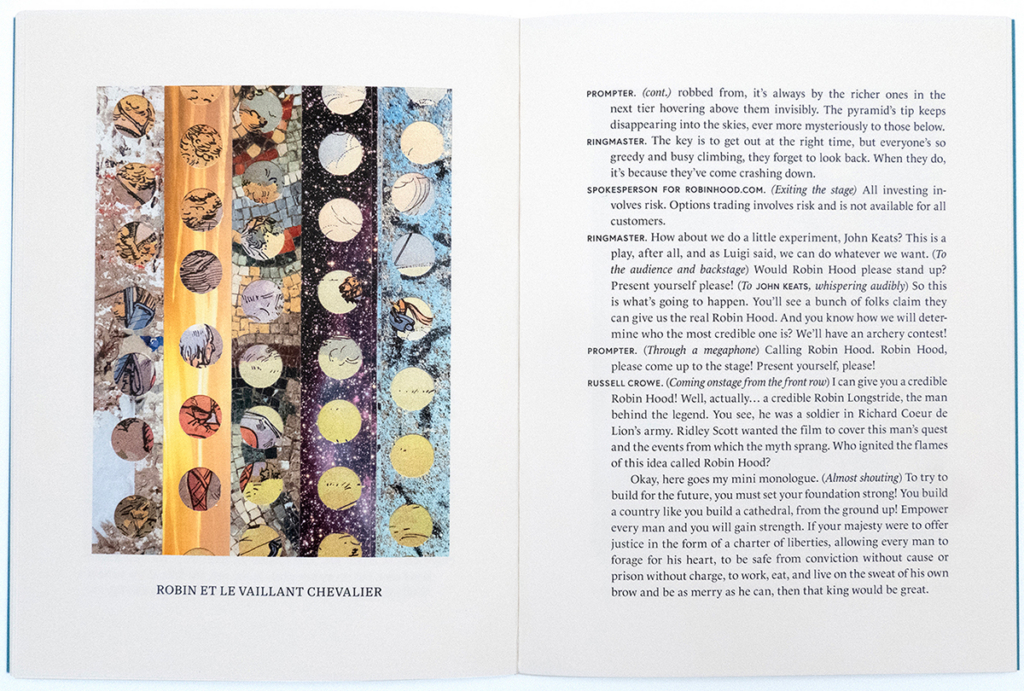
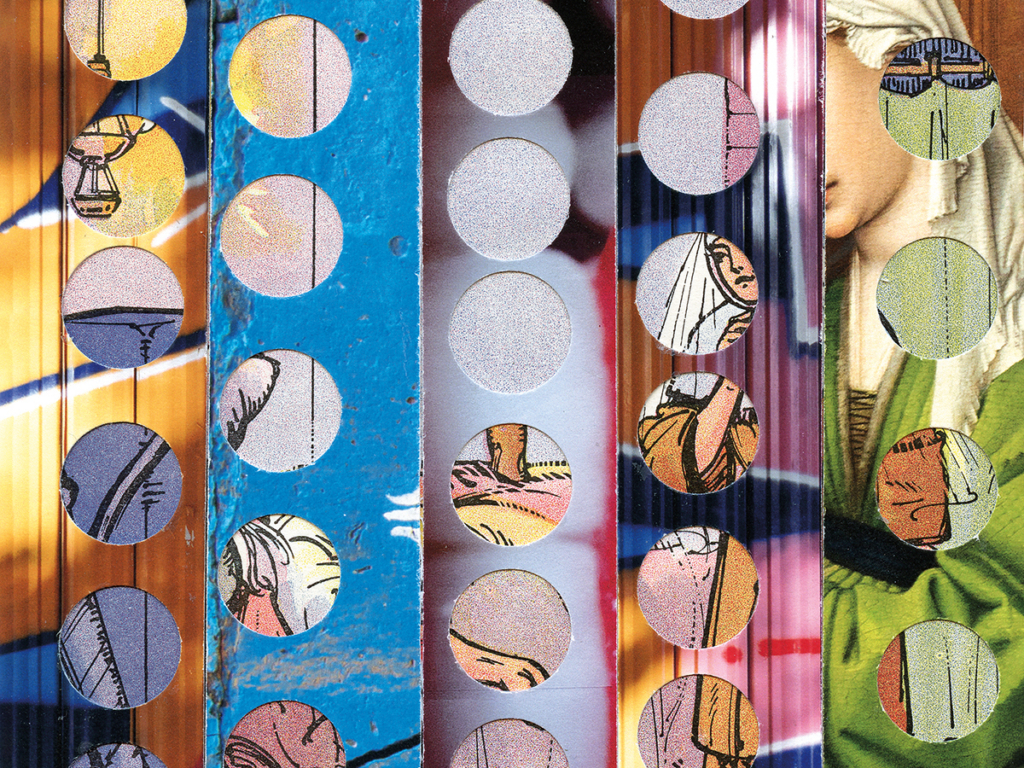
Some of the small circles collected in these limited prints in situ, from The Prude Outlaw, collages by Richard Kraft and text by Mónica de la Torre.
see also
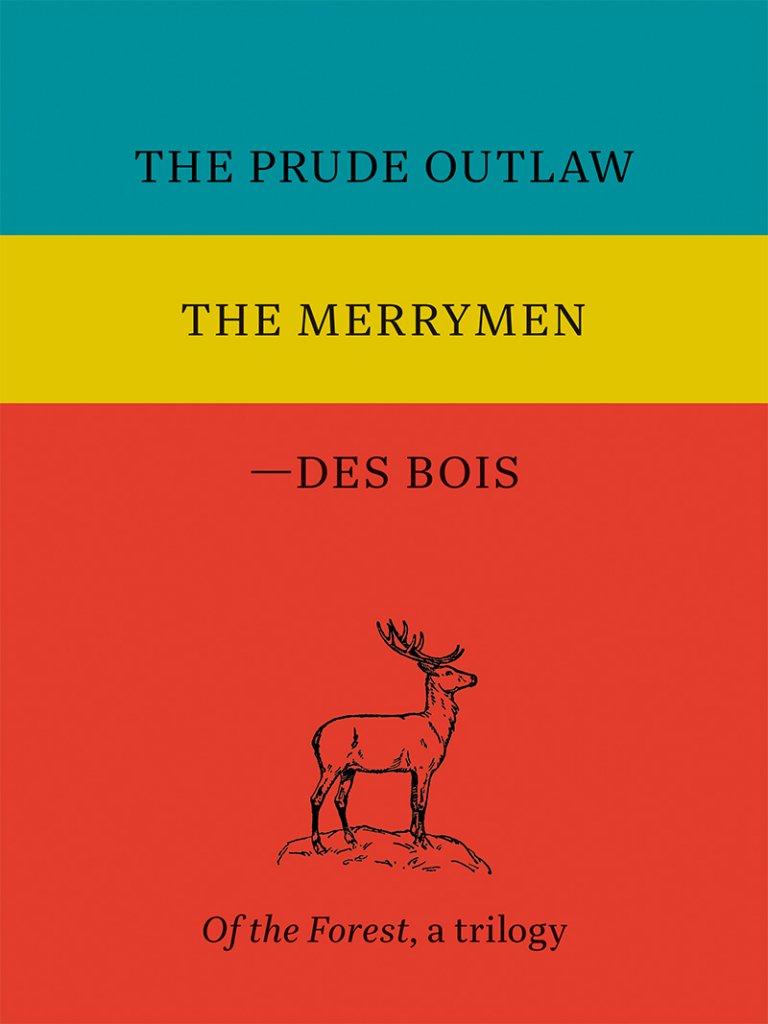
✼ elsewhere:
“In my opinion, genre is a way of speaking about conventions of reading and looking, where you sit or stand and whether you’re allowed to talk to other people or move around while you’re communing with an object or text.” —Lucy Ives, from her interview with Karla Kelsey in Feminist Poetics of the Archive at Tupelo Quarterly
[...]