Cancelled Confessions (or Disavowals) ReviewedDaniella Sanader, The Brooklyn Rail
reviews, 12/16/25
Originally published in the December-January, 2025-26 issue.
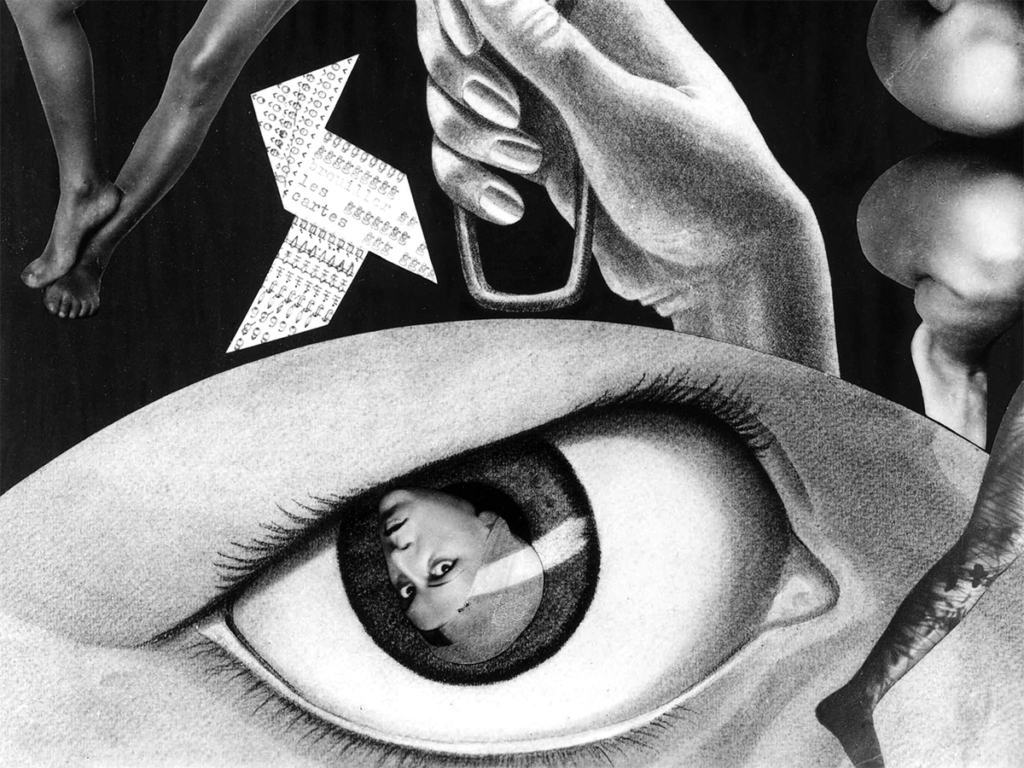
This redesigned “anti-memoir” asserts the sustained interplay and queer mode of collaboration between Claude Cahun and Marcel Moore.
Where did Claude Cahun come from? The Surrealist artist and writer may have been born from the fusion of two slugs, the magical offspring of two male sorcerers on their wedding night, after having “lovingly observed the reproductive processes of various animals, from anemones to man.” Or, they may have crawled from the murky waters of a pond following a storm, an environment they identified as the “perfect playground for a poet.” Alternatively, Cahun may have simply blossomed in place, according to their own aphoristic instruction: “Human body. It should be stuck upside down in a vase so that it arranges itself elegantly, so that it blooms, so that it has four branches, four flowers and the bulb is hidden.”
According to Cahun’s “anti-memoir” Cancelled Confessions (or Disavowals)—originally published as Aveux non avenus by the Parisian Éditions du Carrefour in 1930 and reissued this year by Siglio Press—all of these fantastical origin stories might be possible. However, perhaps it is more accurate to assert that Cahun emerged from the sustained interplay with their lifelong partner Marcel Moore. Historians will indicate that the person named Lucy Schwob at birth—child of a Jewish literary family in Western France—and Suzanne Malherbe—her lover and step-sister—were active in the surrealist and lesbian modernist circles of interwar Paris. But the mercurial identifications of Cahun and Moore, respectively, emerged for both artists not from individualized biological narrative, but as their deeply queer mode of collaboration took root. In fact, as Amelia Groom outlines in the newly written afterword for the Siglio edition, there is an increasing effort to recuperate Cahun and Moore as crucial precedents to contemporary understandings of trans/non-binary/genderqueer subjectivity.
Continue reading at The Brooklyn Rail.
see also

✼ natalie’s upstate weather report:
october 23, 2024—a sojourn across the sea for the Small Publishers Fair in London! Our intrepid publisher has lugged three suitcases with the most minimum of clothing to maximize the books—almost 150 pounds of them. (For the lucky few, a first glimpse of Sophie Calle’s The Sleepers!)
[...]